
The Safe Oil Storage Tunnels Darwin

19 February 1942

On this day, more than 188 Japanese aircraft carried out a major air attack on Darwin and Darwin Harbour. A second raid later in the afternoon caused additional destruction to the airfield and nearby infrastructure. This event marked the first of over 50 air raids on northern Australia during the Second World War. It remains the largest foreign attack ever launched on the Australian mainland, and it signalled the beginning of what became known as the Battle of Darwin.


Following the loss of more than 20,000 tons of oil in these initial raids, the Australian Government recognised the urgent need to protect its fuel supplies. Oil was essential for military operations, and without secure storage, Australia’s defensive capabilities were significantly threatened. As a result, plans were made to construct eight underground oil storage tunnels beneath Darwin.
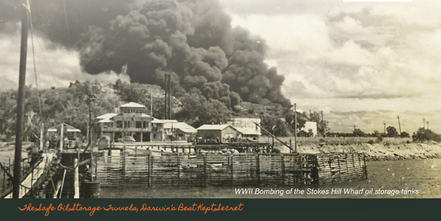
On this day, more than 188 Japanese aircraft carried out a major air attack on Darwin and Darwin Harbour. A second raid later in the afternoon caused additional destruction to the airfield and nearby infrastructure. This event marked the first of over 50 air raids on northern Australia during the Second World War. It remains the largest foreign attack ever launched on the Australian mainland, and it signalled the beginning of what became known as the Battle of Darwin.

Following the loss of more than 20,000 tons of oil in these initial raids, the Australian Government recognised the urgent need to protect its fuel supplies. Oil was essential for military operations, and without secure storage, Australia’s defensive capabilities were significantly threatened. As a result, plans were made to construct eight underground oil storage tunnels beneath Darwin.
1942

By the end of war, six tunnels had reached the lock-up stage. However, the project faced significant challenges. The tunnels suffered from persistent water leakage, and construction costs increased. What began as a £220,000 project eventually cost £1.2 million, and despite this major investment, no oil was ever stored in the completed tunnels during WW2.

1950

During the 1950 and early 1960 light grade oil for aviation {Kerosene} was stored successfully by painting the joins with “Two Pack” paint the interior welds due to their porous nature. Today, the tunnels operate as an educational & historical site, allowing visitors to explore the engineering efforts, logistical challenges, and strategic decisions made during wartime.

1992

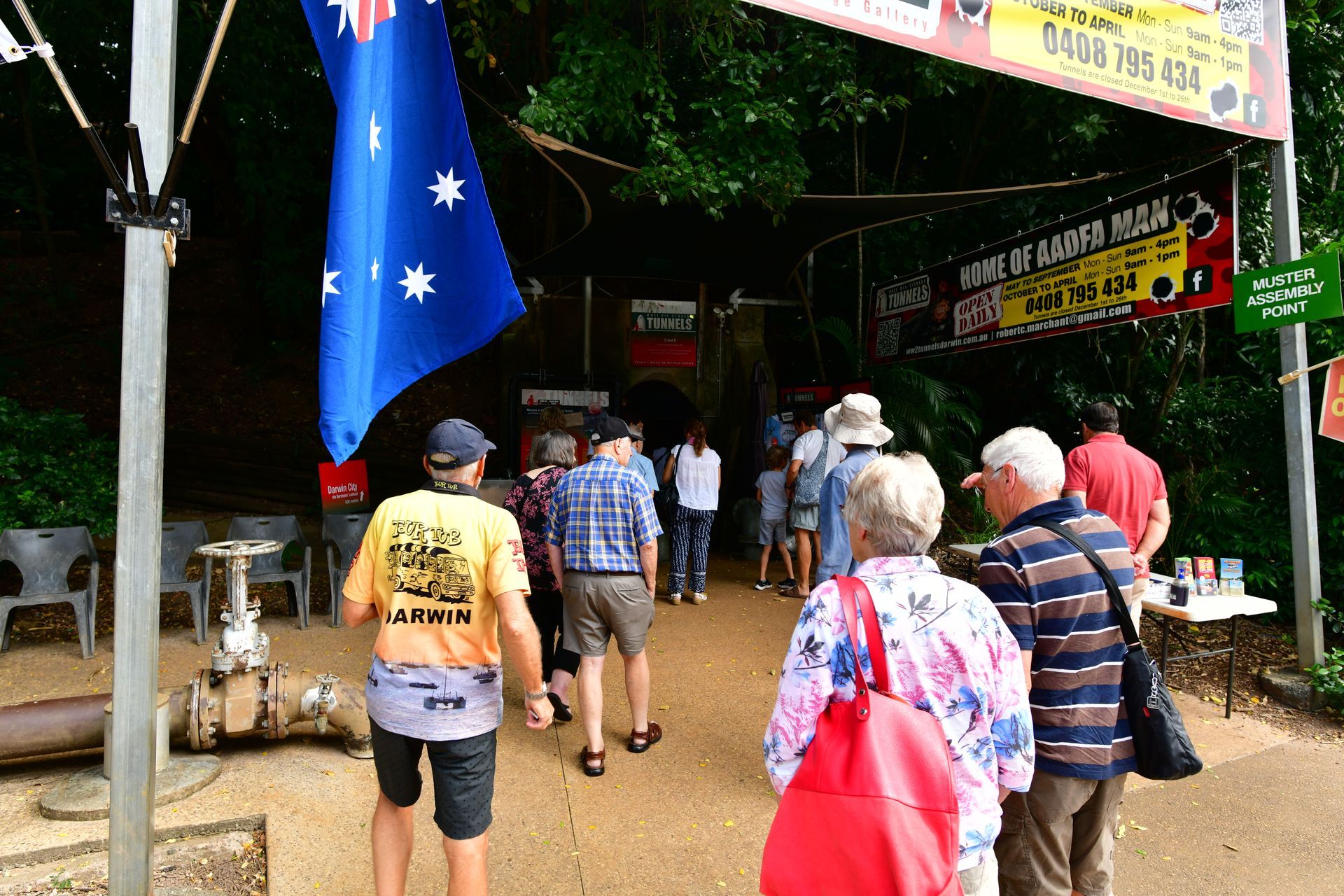
Opened to the public in 1992 to mark the 50th anniversary of the Bombing of Darwin, the tunnels now stand as an important reminder of Australia’s wartime experiences. They highlight the resilience and determination of the personnel who worked in demanding and often uncomfortable conditions beneath the city.